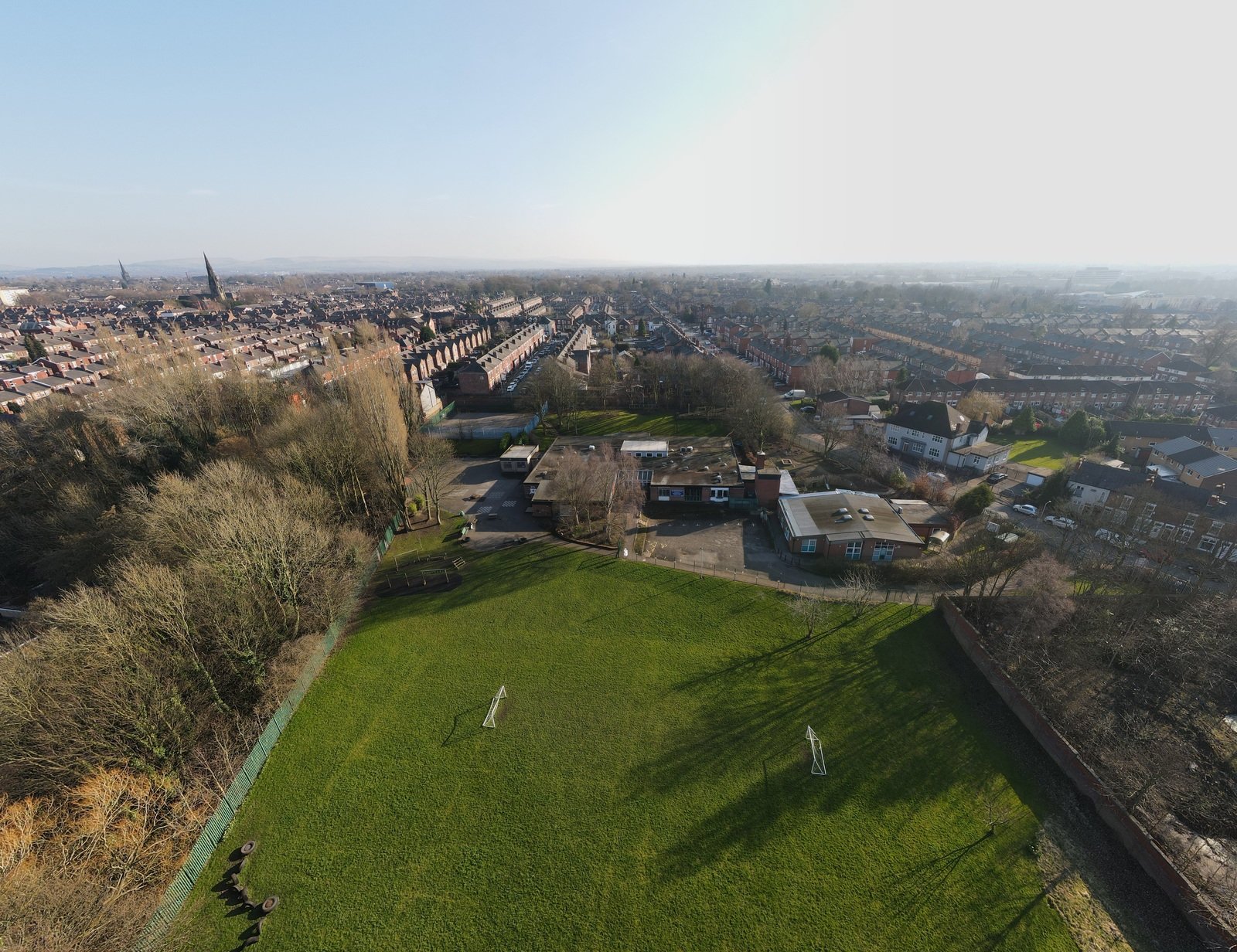
Lark Hill Primary School

A Happy Place To Learn

01614806295

Northgate Road
Stockport
Cheshire
SK3 9PH

headteacher@larkhill-pri.stockport.sch.uk

Please Scroll Down

Maths


At Lark Hill we know that it is vital that children develop early number sense and learn to enjoy playing with mathematics if they are to experience success. Games, puzzles and problem solving are essential to this end. This page aims to introduce you to fun, easy ways to support your child’s mathematical understanding. Please follow the links and play the games: if you tell us that you have played any of these games with your child, that counts as homework.

Please also read this document outlining our approach to the teaching of maths at Lark Hill


Maths at Lark Hill Primary School

At Lark Hill, we believe that a high-quality Mathematics curriculum does far more than teach children how to compute and follow procedures; via the mastery approach it allows them to apply their knowledge to everyday situations. Using the White Rose Maths scheme, we dynamically adapt it to meet the unique learning needs of our pupils. Our curriculum uses a small-step mastery approach supported by specialist training from Tara Loughran, daily structured practice (such as Fluency Bee). Our mathematics lessons are designed to spark curiosity, ignite wonder, and inspire our children to "think like mathematicians, problem solvers, and logical thinkers."

Our goal is to nurture confident, reflective, active mathematical communicators who have the fluency to recall numerical facts automatically, the reasoning skills to justify their thinking and the perseverance to tackle complex problem-solving with deep understanding.

Our Core School Values in Mathematics

Our mathematics learning is deeply rooted in our four core school values:

  • Respect: We look closely at multiple strategies, varied representation models, and differing mathematical approaches, teaching children to respect different ways of thinking and value the logical contributions of their peers.
  • Responsibility: By learning about data analysis and the real-world applications of numerical reasoning, children connect mathematics. They see how accurate decision-making and mathematical logic influence the world they are responsible for today.
  • Creativity: Children engage creatively with mathematics through pattern-seeking, spatial reasoning, concrete-pictorial-abstract explorations, open-ended investigations, and finding alternative strategies to solve complex puzzles.
  • Challenge: We hold high expectations for all children, encouraging them to step outside their comfort zones, embrace mistakes as essential learning opportunities, and push the boundaries of their mathematical reasoning using precise technical vocabulary and sophisticated problem-solving steps.

How We Teach Mathematics: White Rose Maths

While White Rose Maths provides the structural spine for our scheme of learning, its delivery is never treated as a rigid "one-size-fits-all" pathway. At Lark Hill, teachers deliberately adapt White Rose sequences—adjusting pacing, spending extra time on foundational small steps, or introducing additional scaffolding—to ensure instruction directly addresses the baseline data and learning needs of each cohort.

Each teaching sequence follows a progressive "I Do – We Do – You Do" journey built around explicit modelling:


The 3 Core Stages of Instruction ("I Do, We Do, You Do")

1          "I Do" (Teacher Modelling & Explicit Instruction)

  • Adaptive Small Steps & Stem Sentences: Teachers introduce concepts through White Rose small steps, tailored and paced to match the cohort’s readiness. Teachers explicitly model mathematical thinking using precise technical vocabulary and clear worked examples.
  • My Turn, Your Turn: Teachers demonstrate key procedures, visual representations, and reasoning phrases ("My Turn, Your Turn") before asking pupils to repeat or apply them.

2          "We Do" (Guided Practice & Co-Construction)

  • Guided Application: Teachers and pupils compose mathematical solutions together using concrete manipulatives (e.g., ten-frames, base 10, counters), pictorial representations (e.g., bar models, part-whole models), and individual whiteboards.
  • Checking for Understanding: Through strategic pairing, "show me" whiteboard tasks, and targeted questioning, teachers check understanding in real time, adjusting the lesson's pace dynamically based on pupil response.

3          "You Do" (Independent Application & Problem Solving)

  • Independent Practice: Pupils independently apply their learning to fluency, reasoning, and multi-step problem-solving tasks drawn from White Rose resources, Tara Loughran depth tasks, and supplementary problem-solving challenges.
  • Scaffolding & Depth: Pupils build automaticity and depth, utilizing tools, stems, and manipulative scaffolds to ensure full access while being challenged to explain why and how their answers work.


Benefits of White Rose Small-Step Mastery & Daily Fluency

  • Reduces Cognitive Load: By reviewing small chunks of prior learning daily (e.g. Fluency Bee practice) and breaking new concepts into manageable White Rose steps, working memory is freed for complex problem-solving.
  • Builds Fluency & Automaticity: Daily recall of number facts, times tables, and mental arithmetic strategies ensures children develop rapid recall and confidence.
  • Improves Mathematical Reasoning: Explaining strategies aloud and using precise terminology helps pupils identify misconceptions and articulate clear mathematical proofs.

Substantive & Disciplinary Knowledge in Mathematics

  • Substantive Knowledge (Knowing the Mathematics): Children learn established mathematical facts, place value structures, times table multiplication facts, mental and written calculation algorithms, geometric properties, measurement systems, and algebraic rules aligned with the White Rose Maths progression.
  • Disciplinary Knowledge (Thinking Like a Mathematician): Children learn how mathematical knowledge is constructed, proven, and applied. Guided by pedagogical training from Tara Loughran, pupils engage in pattern hunting, conjecture, and counter-examples to evaluate the efficiency of different methods, justify conclusions, spot relationships, and communicate arguments logically.

What Mathematics Looks Like in the Classroom

We want our lessons to feel alive, meaningful, and inclusive for every child at Lark Hill. 

Mathematics is taught in separate year groups not classes across the school.

Early Years (EYFS)

In EYFS, mathematics is embedded through rich play, active games, songs, and daily practical activities using the White Rose Maths EYFS framework to foster early number sense and spatial awareness. Children explore subitising, counting, patterns, and shape using physical manipulatives, ten-frames, and real-world objects in continuous provision. Shared daily routines tackle essential skills requiring regular practice, sparking a joy for playing with numbers from the very start. They also follow the EYFS NCETM steps.

Key Stage 1

In Key Stage 1, children develop a deep understanding of place value, addition, subtraction, and early multiplication/division through the White Rose concrete-pictorial-abstract frameworks. Daily mathematics lessons follow the structured "I Do – We Do – You Do" approach, utilising visual representations (ten-frames, part-whole models, number lines) alongside short-burst fluency sessions. Guided practice ensures children verbally rehearse stem sentences before applying them independently. Children have a daily Fluency Bee session which embeds prior learning. 

Key Stage 2

In Key Stage 2, children begin with targeted practice, such as Fluency Bee, Times Table Rock Stars, before moving into the main daily mathematics lesson. Lessons follow the White Rose Maths scheme to master formal written algorithms, fractions, decimals, percentages, geometry, and statistics. Instruction pushes beyond procedural routines into deep reasoning and problem-solving (drawing on mathematical games), challenging children to investigate patterns, prove assertions, and evaluate strategic efficiency.


Inclusive & Multi-Sensory

Our mathematics lessons are visual, concrete, and interactive. Manipulatives, stem sentences, working walls, and strategic talk partners ensure that all learners, including those with SEND or EAL, can access high-level mathematical concepts without lowering expectations.

British Values Statement

British values, including democracy, the rule of law, individual liberty, mutual respect, and tolerance of different faiths and beliefs, are promoted throughout the Mathematics curriculum and wider school life. These concepts are taught progressively, particularly within units exploring data handling, statistics, financial literacy, fair allocation of resources and collaborative problem-solving, where pupils develop an understanding of logical evidence, fair analysis and respect for differing strategic perspectives.

Oracy & Voice 21 Integration

In Mathematics, talk is the engine of logical thinking. High-quality mathematical oracy allows students to articulate their reasoning, explain why a method works, and justify their answers before committing them to paper. Using the Voice 21 Oracy Framework alongside our White Rose mastery model, we develop student talk through four strands:

  • Cognitive (Linguistic Reasoning): Students use talk to construct mathematical arguments, form conjectures, justify solutions, and prove or disprove assertions.
  • Linguistic (Disciplinary Vocabulary & Stem Sentences): Students actively practice using academic mathematical vocabulary (e.g., sum, product, factor, denominator, commutative) and White Rose talk frames during problem-solving and oral rehearsal.
  • Physical (Rhetoric & Delivery): Students learn to present their mathematical methods clearly, using visual models, clear projection, and precise gesture when demonstrating on working walls or to peers.
  • Social & Emotional (Empathy & Collaboration): Group dialogue and partner work foster active listening, constructive peer feedback during problem-solving, and respectful discussion around differing mathematical strategies.

Assessment & Measuring Impact in Mathematics

The impact of the mathematics curriculum is measured in a number of ways:

1. Formative Assessment & In-Unit Progress

Throughout daily instruction, assessment is continuous and dynamic:

  • Working Walls & Stem Sentences: Classrooms feature live working displays containing key White Rose vocabulary, visual representations, step-by-step worked models and stem sentences that pupils reference as a working guide.
  • Daily Fluency & Retrieval: Short-burst retrieval tasks (e.g., Fluency Bee, times tables songs, and fluency games) consolidate key number facts into long-term memory.
  • Shared & Guided Practice ("I Do, We Do"): Teachers model mathematical thinking daily, assessing understanding in the moment. Guided focus groups target specific pupils who require scaffolded support or further challenge.
  • Live Marking & Misconception Checks: Feedback is provided in the moment wherever possible. Teachers identify misconceptions instantly using "show me" whiteboards, allowing pupils to adapt and refine their work during the lesson.

2. Evaluative Assessment: End-of-Unit Checks

At the end of a teaching unit, children complete an independent post-assessment task using White Rose end-of-block assessments.

  • Purpose: To evaluate the learning and progress made across the entire mathematics unit.
  • How it Works: Children independently apply their fluency, reasoning, and problem-solving skills to fresh context problems, demonstrating their mastery of the unit's concepts.
  • Measuring Impact: Teachers compare post-unit performance directly against baseline diagnostic checks to measure distance travelled and evaluate pupil progress.

3. Overall Assessment and Moderation

  • Teacher Professional Judgement: Teachers evaluate overall mathematical attainment against age-related national curriculum expectations using evidence from independent bookwork, White Rose termly assessments and standardised checks.
  • Moderation & Pupil Voice: Regular internal and cluster moderation sessions ensure consistent standardisation across year groups. Pupils regularly take part in 'pupil voice' meetings to share their mathematics books, explain their reasoning and reflect on their personal targets as mathematicians.


Times Tables

We use songs to learn the times tables. Once we have learnt the tables number facts in order using the songs and the 1, 2 ,3number game, we play other games, like Racetracks, to learn them in any order. Watch these videos so you can sing the songs with your child.

3 times table song

4 times table song

6 times table song

7 times table song

8 times table song

9 times table finger trick

Games to play at home.

Parents Times Table Tool Kit

Quick-fire addition and subtraction practise

Numberwang! – great game for reasoning add/subtract/multiply/divide  KS2

Parity – brilliant, simple puzzle for reasoning and introducing negative numbers. Ages 5-adult.

Mathman – addition and subtraction Maths Hangman

Nim – great for developing strategy

Ultimate noughts and crosses

Set game – can you match the sets in this daily puzzle?

Games for two from nrich maths

Gareth Metcalfe’s I See Maths Daily Lessons