Lark Hill Primary School

A Happy Place To Learn

01614806295

Northgate Road
Stockport
Cheshire
SK3 9PH

headteacher@larkhill-pri.stockport.sch.uk

Please Scroll Down
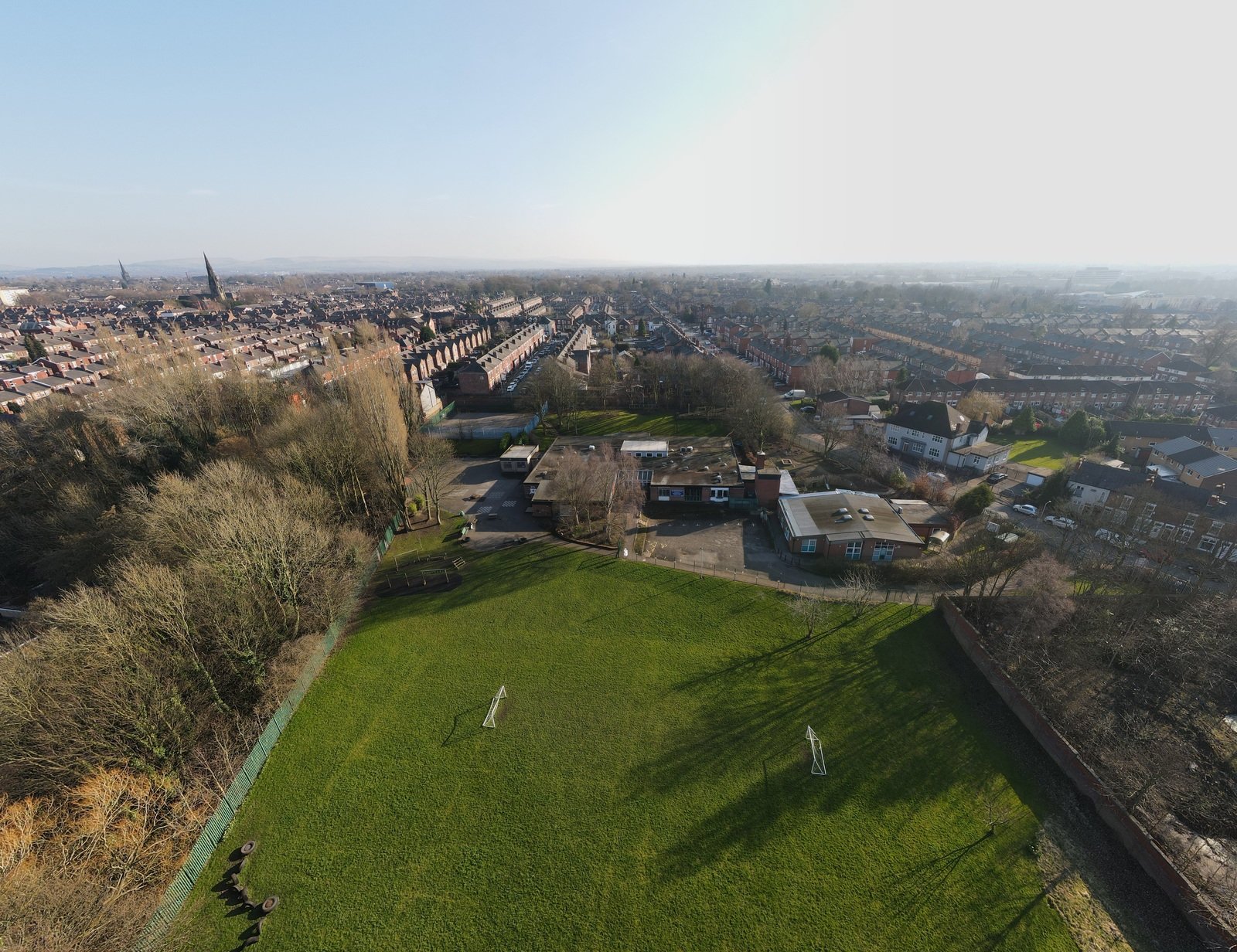
PE at Lark Hill Primary School

At Lark Hill, we believe that a high-quality Physical Education (PE) curriculum inspires all pupils to succeed and excel in competitive sport and other physically demanding activities. Our PE curriculum provides opportunities for pupils to become physically confident in a way that supports their health and fitness, while fostering character, resilience and fair play.

We aim to inspire active, confident and reflective movers who love being physical, understand how to keep their bodies healthy and develop a genuine, lifelong passion for sport and physical activity.                                                                                                                         Our PE learning is rooted in our four core school values:

  • Respect: Pupils demonstrate sportsmanship, abide by rules, respect officials and show consideration for peers of all abilities during collaborative and competitive play.
  • Responsibility: Children take ownership of their personal fitness, look after sports equipment, take on leadership roles (such as warm-up leaders or umpires) and understand how to keep themselves and others safe.
  • Creativity: Pupils explore creative expression through dance choreography, gymnastics sequence design and strategic problem-solving in tactical invasion games.
  • Challenge: Children are challenged to improve their personal bests, master complex motor skills, apply tactical thinking under pressure and persevere through physical difficulty.

How We Teach PE: Our Approach

PE at Lark Hill is delivered as a progressive journey through the Get Set 4 PE scheme of work. The scheme uses a holistic Whole Child approach, ensuring that lessons focus not only on physical competence but also on social, emotional and cognitive growth.

Every lesson explicitly targets four areas of development:

  1. Physical: Mastering fundamental movement skills (FMS), sport-specific techniques, agility, balance, coordination and stamina.
  2. Social: Collaboration, communication, sportsmanship, leadership and inclusion.
  3. Emotional: Resilience, self-regulation, managing success and defeat and building confidence.
  4. Thinking (Cognitive): Tactical decision-making, evaluating performance, understanding rules and strategic planning.


Substantive & Disciplinary Knowledge in PE

Substantive Knowledge (Physical Content & Skill)

  • Fundamental Movement Skills (FMS): Running, jumping, hopping, skipping, throwing, catching, rolling and kicking.
  • Sport-Specific Technique: Precise execution of footwork, racket strikes, passing techniques, gymnastic balances and dance motifs.
  • Health & Fitness Mechanics: Understanding how the body reacts to exercise, heart rate, flexibility, strength and stamina.

Disciplinary Knowledge (Thinking & Acting like an Athlete)

  • Tactics & Strategies: Understanding attacking vs. defending roles, creating space, boundary coverage and pacing.
  • Evaluating & Improving: Observing self and peer performance, analysing movement patterns and adjusting improve outcomes.
  • Rules & Fair Play: Understanding official sporting rules, umpiring and playing with integrity.

A Spiral Journey Through Movement

Our PE curriculum follows a progressive structure that builds upon prior learning across key stages:

  • EYFS / KS1: Focuses on fundamental movement skills, body management, basic object control, simple rules and creative expression through dance and gymnastics.
  • Lower KS2: Transitions from fundamental skills to modified team games, introductory tactics, aesthetic sequencing and outdoor adventurous activities (OAA).
  • Upper KS2: Refines specialised sporting skills, complex tactical decision-making, officiating, officiating duties and sustained physical exertion.

Mixed-Age Class Strategy

To ensure full National Curriculum coverage, skill progression and non-repeating unit content across our mixed-age classes, PE is structured using a 2-Year Rolling Cycle (Cycle A and Cycle B) for mixed cohorts, alongside a single-year track for straight classes:

  • Robins (Mixed Year 1 / Year 2): 2 Year Rolling Cycle
  • Starlings (Mixed Year 2 / Year 3): 2 Year Rolling Cycle (Bridging KS1 & LKS2)
  • Kestrels (Mixed Year 4 / Year 5): 2 Year Rolling Cycle (Bridging LKS2 & UKS2)
  • Skylarks (Year 6): Single Year Track 


How Differentiation Works in Mixed Classes

To deliver Get Set 4 PE smoothly in our split classes without pupils repeating content or missing key milestones, teachers use Get Set 4 PE’s single-year lesson units paired with the platform’s built-in STEP Framework (Space, Task, Equipment, People) and differentiated success criteria:

  • Teaching from a Single Unit Plan: The teacher selects the appropriate unit from the 2-Year Rolling Cycle. The core skill or activity is delivered to the class as a whole.
  • Assessing via Embedded Success Criteria: Teachers evaluate pupils against Get Set 4 PE's multi-tiered success criteria (Working Towards, Expected, Greater Depth or Year Group learning outcomes) embedded within each lesson card.
  • Adapting via the STEP Framework:
    • Space: Adjusting pitch sizes or target distances (e.g., younger pupils throw or pass over shorter distances; older pupils work in tighter spaces to increase pressure).
    • Task: Modifying rules and touch limits (e.g., younger pupils have unlimited touches; older pupils are limited to two touches or must use non-dominant limbs).
    • Equipment: Modifying gear (e.g., larger/softer balls or wider bats for younger learners; standard equipment or smaller target zones for older learners).
    • People: Structuring groups intentionally (e.g., pairing younger pupils with older peer-mentors for skill drills or matching equal ability levels for competitive mini-games).

Inclusive & Multi-Sensory Approach

Get Set 4 PE lessons are adapted to ensure all pupils, including those with SEND or medical needs participate fully. Activities utilise step-by-step differentiation (using the STEP framework: Space, Task, Equipment, People), visual flashcards, modified equipment (e.g., larger/softer balls, lower nets) and structured peer support.

British Values & Oracy in PE

  • British Values: Rule of law (abiding by referee decisions), democracy (team decision-making in tactics), individual liberty (choosing creative paths in dance/gymnastics) and mutual respect (shaking hands, praising opponents).
  • Oracy: Guided by the Voice 21 framework, pupils discuss tactical strategies, evaluate peer performances using technical vocabulary (e.g., coordination, extension, possession, tracking) and articulate constructive feedback.

Progression Overview by Class

Robins | Mixed Year 1 / Year 2 (2-Year Cycle)

Cycle A

Term

Unit 1 (Lesson A)

Unit 2 (Lesson B)

Key Focus Skills & Progression

Autumn 1

Introduction to PE

Fundamentals

Y1: Spatial awareness, stopping safely, changing direction.

Y2: Changing speed, dynamic balance, agility dodging.

Autumn 2

Gymnastics

Ball Skills

Y1: Shapes, simple rolls, tracking a rolling ball.

Y2: Linking shapes on apparatus, dribbling with hands/feet.

Spring 1

Dance

Sending & Receiving

Y1: Expressing feelings through movement, rolling/throwing to a partner.

Y2: Rhythm, counts of 8, catching on the move.

Spring 2

Yoga

Target Games

Y1: Balance poses, aiming at large targets.

Y2: Flowing poses, controlling power/accuracy for distance.

Summer 1

Athletics

Net & Wall

Y1: Sprinting technique, underarm throwing.

Y2: Pacing, racket control, ready position.

Summer 2

Team Building

Striking & Fielding

Y1: Turn-taking, striking off a tee.

Y2: Simple team problem solving, catching underarm.

Cycle B

Term

Unit 1 (Lesson A)

Unit 2 (Lesson B)

Key Focus Skills & Progression

Autumn 1

Fundamentals

Fitness

Y1: Hopping, jumping, landing safely.

Y2: Stamina, speed, identifying changes in body during exercise.

Autumn 2

Dance

Invasion Games

Y1: Character movement, basic attacker/defender awareness.

Y2: Sequencing dance phrases, simple group attacking tactics.

Spring 1

Gymnastics

Sending & Receiving

Y1: Barrel rolls, straight jumps off small apparatus.

Y2: Sequence creation, chest passing and receiving.

Spring 2

Yoga

Target Games

Y1: Breathing control, rolling towards targets.

Y2: Strength/flexibility poses, overarm target accuracy.

Summer 1

Athletics

Net & Wall Games

Y1: Jumping for distance, throwing for distance.

Y2: Relay passing, returning over a net.

Summer 2

Ball Skills

Striking & Fielding

Y1: Kicking to a target, stopping a rolling ball.

Y2: Bowled ball tracking, striking moving targets.


Starlings | Mixed Year 2 / Year 3 (2-Year Cycle)

Cycle A

Term

Unit 1 (Lesson A)

Unit 2 (Lesson B)

Key Focus Skills & Progression

Autumn 1

Fundamentals (Y2/3)

Ball Skills (Y2/3)

Y2: Basic balance, dribbling control.

Y3: Changing direction with control, passing under pressure.

Autumn 2

Gymnastics

Invasion Games

Y2: Sequence of 2-3 shapes/balances.

Y3: Sequence of 4+ elements, understanding keeping possession.

Spring 1

Dance

Fitness

Y2: Responding to music stimuli.


Y3: Expressing narrative ideas, understanding aerobic fitness.

Spring 2

Yoga

Dodgeball

Y2: Static balances, basic dodgeball safety.

Y3: Dynamic flexibility flows, tactical throwing and catching.

Summer 1

Athletics

Tennis

Y2: Sprinting form, underarm throw.

Y3: Running technique for distance, forehand racket strokes.

Summer 2

OAA (Outdoor Adventurous)

Cricket / Striking

Y2: Following simple maps.

Y3: Map orientation, communication, basic cricket bowling technique.

Cycle B

Term

Unit 1 (Lesson A)

Unit 2 (Lesson B)

Key Focus Skills & Progression

Autumn 1

Team Building

Basketball / Netball

Y2: Cooperative movement games.

Y3: Collaborative problem-solving, chest pass and bounce pass rules.

Autumn 2

Dance

Football

Y2: Unison movement.


Y3: Unison and canon, short passing and dribbling inside foot.

Spring 1

Gymnastics

Tag Rugby

Y2: Balances on points and patches.

Y3: Symmetrical/asymmetrical balances, backward passing rules.

Spring 2

Golf

Fitness

Y2: Putting accuracy.

Y3: Stance and chipping technique, tracking agility improvements.

Summer 1

Athletics

Net & Wall

Y2: Jumping technique.

Y3: Pulling/pushing throw mechanics, backhand tennis return.

Summer 2

Rounders

Yoga

Y2: Underarm bowl, fielding.

Y3: Batting mechanics, mindful movement and focus.


Kestrels | Mixed Year 4 / Year 5 (2-Year Cycle)

Cycle A

Term

Unit 1 (Lesson A)

Unit 2 (Lesson B)

Key Focus Skills & Progression

Autumn 1

OAA

Football

Y4: Map reading, team trail solving.


Y5: Navigational problem-solving, tactical space creation and defending.

Autumn 2

Gymnastics

Hockey

Y4: Matching and mirroring on apparatus.

Y5: Complex inverted balances, open-stick dribbling and tackle timing.

Spring 1

Dance

Netball

Y4: Choreographing in pairs.

Y5: Formations and motif development, footwork rule adherence (pivot).

Spring 2

Fitness

Dodgeball

Y4: Agility ladders, stamina circuits.

Y5: Measuring heart rate recovery, tactical ducking and team coordination.

Summer 1

Athletics

Tennis

Y4: Shot put / javelin prep, sprinting technique.

Y5: Long jump technique, forehand and backhand rally control.

Summer 2

Cricket

Swimming / Water Safety

Y4: Overarm bowling, fielding position.

Y5: Tactical field placement, water confidence and strokes (if scheduled).

Cycle B

Term

Unit 1 (Lesson A)

Unit 2 (Lesson B)

Key Focus Skills & Progression

Autumn 1

Team Building

Tag Rugby

Y4: Leader-led communication tasks.

Y5: Strategic team leadership, defensive line formation (offside awareness).

Autumn 2

Dance

Basketball

Y4: Dance styles exploration.

Y5: Complex rhythm routines, set shot technique and drive to basket.

Spring 1

Gymnastics

Handball

Y4: Vaulting preparation, bridge balances.

Y5: Flight onto/off apparatus, jump shooting and fast breaks.

Spring 2

Yoga

Golf

Y4: Strength poses, putting circuits.

Y5: Controlled flow sequences, course management and swing force.

Summer 1

Athletics

Rounders

Y4: Relay baton passing technique.

Y5: Pacing over distance, bowling variations and stumpings.

Summer 2

OAA

Swimming / Water Safety

Y4: Orienteering basics.

Y5: Compass point navigation, stroke efficiency and self-rescue.


Skylarks | Year 6 (Single Year Curriculum)

Term

Unit 1 (Lesson A)

Unit 2 (Lesson B)

Key Focus Skills & High-Level Application

Autumn 1

Netball

Football

Applying full match rules, tactical positioning, officiating, transition play.

Autumn 2

Gymnastics

Tag Rugby

Complex group counter-balances, offloading while tackled, formation defence.

Spring 1

Dance

Basketball

Advanced choreographic devices (canon, unison, contrast), screen plays, layups.

Spring 2

Hockey

OAA

Push passing under pressure, complex map navigation, survival/team tasks.

Summer 1

Athletics

Tennis

Offsetting pacing, hurdle technique, serving technique, singles/doubles positioning.

Summer 2

Cricket

Fitness / Transition

Match management, bowling accuracy, design personal fitness plans for KS3.


Vocabulary Progression

Class / Stage

Core Physical & Technical Vocabulary

Disciplinary, Social & Cognitive Concepts

Robins (Y1/2)

Balance, travel, roll, catch, bounce, space, speed, bend, leap, stretch.

Safety, team, share, partner, try again, turn-taking, respect.

Starlings (Y2/3)

Possession, dribble, chest pass, rhythm, sequence, symmetric, tracking, force.

Tactics, attacker, defender, evaluate, dynamic balance, stamina.

Kestrels (Y4/5)

Pivot, backhand, bowling, stride, flight, vault, spatial awareness, stroke.

Offside, formation, communication, pacing, refereeing, personal best.

Skylarks (Y6)

Counter-balance, screen, transition, trajectory, stroke mechanics, endurance.

Strategy, officiating, analysis, leadership, resilience, self-regulation.

Assessment, Evidence, and Curriculum Impact

The impact of our PE curriculum is monitored and evaluated using Get Set 4 PE assessment systems:

Get Set 4 PE uses a holistic assessment framework built directly around the Whole Child model. Instead of purely grading physical execution or athletic speed, it assesses children across four key strands of development in every unit:

1. The Whole Child Assessment Strands

Get Set 4 PE breaks down learning objectives into four distinct areas:

  • Physical: Executing motor skills, agility, coordination, stamina, and sport-specific techniques (e.g., throwing mechanics, footwork, balances).
  • Social: Collaboration, communication, sportsmanship, turn-taking and supporting peers.
  • Emotional: Managing success and defeat, self-regulation, resilience, confidence and determination.
  • Thinking (Cognitive): Tactical awareness, understanding rules, decision-making under pressure, evaluating performance and planning strategies.

2. Differentiated Success Criteria (3-Tiered Judgements)

In every single lesson plan, Get Set 4 PE provides clear, observable success criteria mapped to three attainment bands:

  • Working Towards (Developing): The child is beginning to show control or understanding, requiring teacher scaffolding, simplified rules or adapted equipment.
  • Expected (Achieving): The child consistently executes the core physical skill and demonstrates the required social/tactical understanding for their year group.
  • Greater Depth (Exceeding): The child performs skills fluently at speed/under pressure, applies advanced tactics, leads peers or evaluates performance critically.

3. Practical Assessment Methods

Because PE is a practical subject, Get Set 4 PE's assessment system is designed to minimise teacher paperwork while gathering meaningful data:

  • In-the-Moment Formative Observation: Teachers observe pupils during small-sided games, drills, sequences and team tasks using the lesson card success criteria.
  • Digital Tracking Tools: The online Get Set 4 PE platform allows teachers or subject leads to log class data quickly. Teachers mark off whether pupils are Working Towards, Expected, or Exceeding at the end of a unit.
  • Self & Peer Assessment: Lessons regularly feature pause for thought plenary moments where pupils evaluate their own performance or give constructive feedback to a partner against the whole-child strands.
  • Visual/Video Evidence: Teachers often capture short video clips or photos of dance choreography, gymnastics routines or tactical match scenarios to store as digital evidence of progression over time.